A Three Day Sunshine Coast Itinerary for the Coast and Hinterland
The trick to a good Sunshine Coast itinerary is not trying to see all of it, because the Coast is long, the hinterland is up a winding range, and the drive from Caloundra to Noosa takes longer than visitors expect. This is the plan we’d give a friend with three days on the Sunshine Coast: one day on the water around Mooloolaba, one day up the range, and one day in Noosa, with a few swaps depending on who’s travelling with you.
Before you start: base yourself in the middle
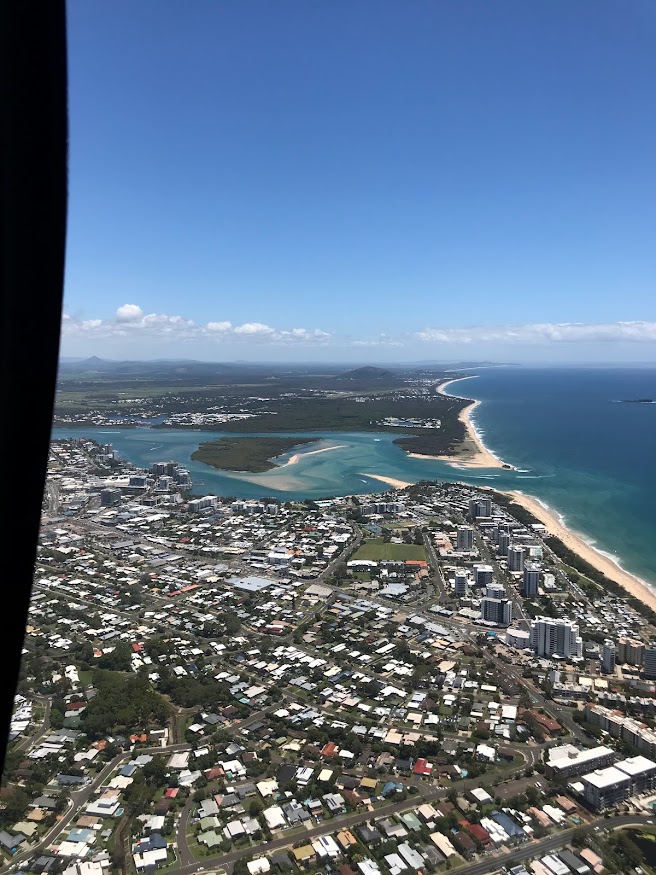
For a three day trip, we’d stay somewhere around Mooloolaba, Maroochydore or Alexandra Headland. From there, Noosa and the hinterland towns are each under an hour’s drive, so you’re not packing and unpacking every night. If Noosa is the main event for you, stay there instead and flip the order of the days. Either way, you’ll want a car. Public transport covers the coastal strip, but the hinterland is a different story.
A quick note we’ll only say once: opening hours, tour departures and track conditions change, so check the official pages we’ve linked before you head off. The one exception is safety, which we’ll mention where it matters.
Day one: Mooloolaba and the water
Morning on the Esplanade
Start slow. Mooloolaba Beach faces north, which means it’s usually calmer than the open surf beaches further up the Coast, and it’s patrolled. Have a swim between the red and yellow flags, then grab a coffee along the Esplanade and watch the early walkers do their laps. If you’re travelling with little ones, this beach alone will keep them happy for a whole morning. Our guide to Mooloolaba has more on the town itself.
Walk to Point Cartwright
Once the coffee kicks in, walk or drive around to Point Cartwright at Buddina, on the other side of the Mooloolah River mouth. The Point Cartwright loop is about 2 km and takes in the lighthouse, the painted reservoir and wide views back over the river, the Mooloolaba Spit and out to sea. You can start from La Balsa Park by the river or from the car park at the end of Pacific Boulevard. People have been known to spot a seal resting on the rocks here. We can’t promise you one, but keep an eye out. The council’s own advice is that swimming here is at your own risk, and the scramble down to the beach on the ocean side needs care, so save the swim for the patrolled beach.
Afternoon: whatever the weather says
The middle of the day is when you either flop on the sand or head somewhere with a roof. If it’s hot, windy or one of those afternoons when a storm is clearly brewing over the range, the aquarium at The Wharf is the easy indoor option and it’s right there on the river. If the sun’s behaving, the Mooloolaba Spit is good for a lazy wander with the river on one side and the boats coming and going.
Evening: a sunset cruise on the canals
Here’s where we’d spend a bit of the holiday budget. A Mooloolaba sunset cruise with live music leaves from The Wharf and takes you through the Mooloolaba canals on a heritage vessel, with acoustic music and a grazing box on board. It’s a gentle, unhurried way to end your first day, and you get a proper look at the canal homes that most visitors only ever see from the road. Book ahead in school holidays.
Day two: up the range to the hinterland
Day two is the one people tend to underestimate. The hinterland feels like a different region entirely: cooler air, green paddocks, rainforest and small villages strung along a ridge. Leave early, because the roads are winding and the best views are clearest in the morning before the haze or cloud builds.
The Glass House Mountains first
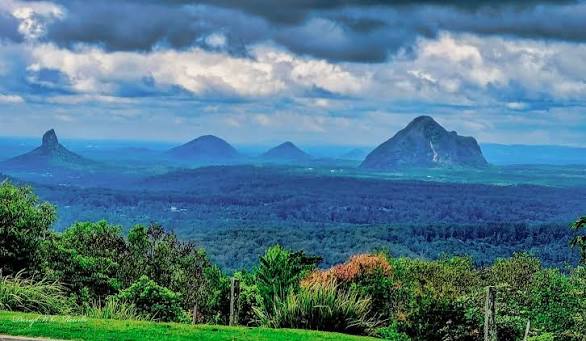
Head south and inland to the Glass House Mountains. The lookout in Beerburrum State Forest is the easiest way to see the whole cluster of peaks at once, and it’s a good place to stretch your legs after the drive. If you’re keen for a proper climb, the Mount Ngungun summit track is about 2.8 km and takes around two hours. It’s graded moderate, finishes with 360 degree views and puts you face to face with Tibrogargan, Coonowrin and Beerwah. It also passes close to cliff edges and the rocks get slippery in the wet, so wear decent shoes, carry water and keep a close hand on the kids. Don’t try the bigger peaks unless you’re experienced: Queensland Parks is very clear that these are not easy climbs.
Maleny and Mary Cairncross
From the mountains, drive up the range to Maleny. Our first stop up here is always Mary Cairncross Scenic Reserve. The rainforest walk is about 2 km return, with boardwalks, bridges and viewing platforms, and a large part of it is accessible. Then you step out of the trees and there are the Glass House Mountains again, this time laid out below you across the valley. It’s one of those views that makes people go quiet for a minute. There’s an education centre and a cafe at the reserve, which helps if anyone in your group is running low on patience.
Maleny itself is a working country town with a creative streak. Wander the main street, find somewhere for lunch, and don’t rush it.
Along the ridge to Montville
The road from Maleny to Montville runs along the ridge with views on both sides, and it’s honestly one of the nicest short drives on the Coast. Montville is smaller and more polished than Maleny: galleries, craft shops and cafe decks looking out towards the coast.
If you’ve still got legs, finish with Kondalilla National Park just outside Montville. The Kondalilla Falls circuit takes you past a rock pool at the top of the falls and down to a view from the base, through rainforest with bunya pines and piccabeen palms. Fair warning: there are over 300 stairs, and every one of them feels steeper on the way back up. Give yourself enough daylight to finish. After rain, the falls are at their best and the track is at its muddiest, so pick your shoes accordingly.
If you’ve got kids: swap in Australia Zoo
Travelling with children? Honestly, Australia Zoo might be the thing they remember most, and it sits at Beerwah, right in the Glass House Mountains area. In that case, spend most of day two at the zoo, then drive up to Maleny for the late afternoon view from Mary Cairncross. If you’d rather not drive, an Australia Zoo transfer and entry package bundles the ticket and the ride in one booking. Allow a full day. It’s a big place, and the shows tend to set the rhythm of your visit, so look at the schedule on the official Australia Zoo website when you arrive and plan around it.
Day three: Noosa, from headland to river
Save Noosa for your last day, partly because it’s a fitting finish and partly because you’ll want an early start to beat the car park crowds. Our guide to Noosa Heads, its beaches and the national park goes deeper if you want to stay longer.
Morning: the coastal walk in Noosa National Park
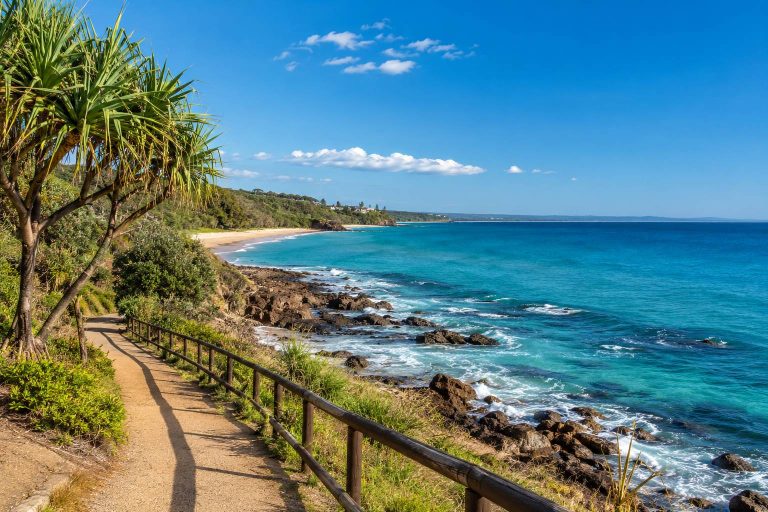
Get there early. Parking near the headland is famously tight and it fills fast on fine days. The coastal walk runs from the Noosa Headland day use area towards Sunshine Beach, past Boiling Pot, Dolphin Point and Hell’s Gates. The first stretch to Dolphin Point is sealed and suitable for prams, with some steeper sections. Beyond that it becomes an uneven gravel and sand track, so turn around at Dolphin Point if you’ve got a stroller or tired legs.
Keep looking up into the trees, because koalas are regularly seen along the walk. Look down at the water too: dolphins and turtles turn up, and in the cooler months, roughly June to November, humpback whales cruise past the headland. If you fancy a swim afterwards, do it back at Noosa Main Beach between the flags. The bays along the headland can look calm and still have rocks and currents you can’t see from the path.
Lunch near Hastings Street, then a slow arvo
Walk back to Noosa Main Beach and Hastings Street for lunch. It’s busy and it knows it, but it’s also right on the sand, and an hour of people watching with salty hair is part of the Noosa experience.
Afternoon: the Noosa Everglades
For your final afternoon, head north into the Noosa Everglades, the quiet upper reaches of the Noosa River known as the river of mirrors. On a still day the water reflects the sky so perfectly it messes with your sense of up and down. Getting there on your own takes some planning, which is why we like the Noosa Everglades afternoon cruise. It includes a bus transfer from Noosa to the departure point north of town, commentary on the river and its wildlife, and food and drinks on board. Bring a hat and keep your camera handy for the birdlife. One practical note: at some times of year, boarding can mean walking through shallow water, so wear shoes you don’t mind getting wet. It’s also not suitable for people with limited mobility.
Changing it up
A few swaps we’d suggest depending on your crew and the weather:
- On a showery day, move the aquarium to the top of your list and save the hinterland for when the views are clear.
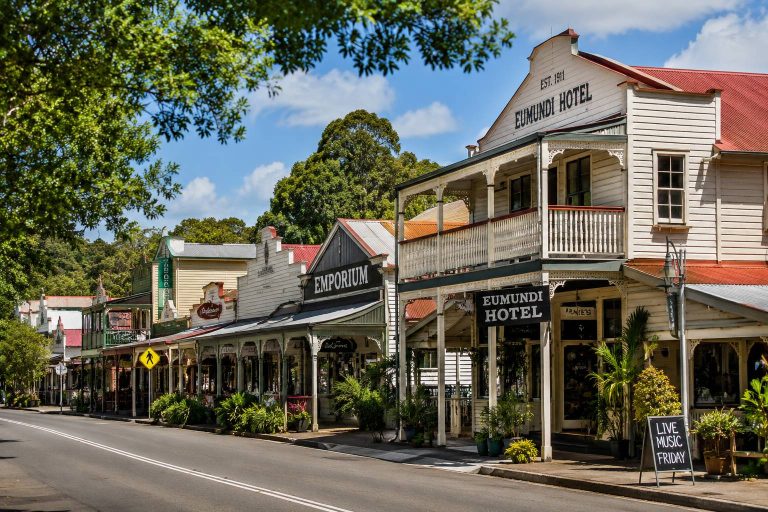
- If your trip lands on a market day, the Eumundi Markets are a short drive from Noosa and easy to fit into the morning of day three before the national park.
- Got a fourth day? Spend it on whichever beach town you liked most and do nothing at all. That’s what locals do on weekends.
- For a quieter weekend itinerary, drop day one and spend a night up in the hinterland instead, where the evenings are cool and the mornings are misty.
For more ideas to slot in or swap out, our list of the best things to do on the Sunshine Coast covers the big attractions and plenty of smaller ones.
One last safety note
Most visitor trouble on the Coast comes from the water, not the walks. Swim at patrolled beaches between the red and yellow flags, and if a beach is closed or the flags are down, don’t go in. Check Beachsafe for patrolled beaches and conditions on the day, and look at Queensland Parks for track closures before any national park walk, especially after heavy rain.
This article contains affiliate links. If you book through them, Sunshine Coast Life may earn a small commission at no extra cost to you.